
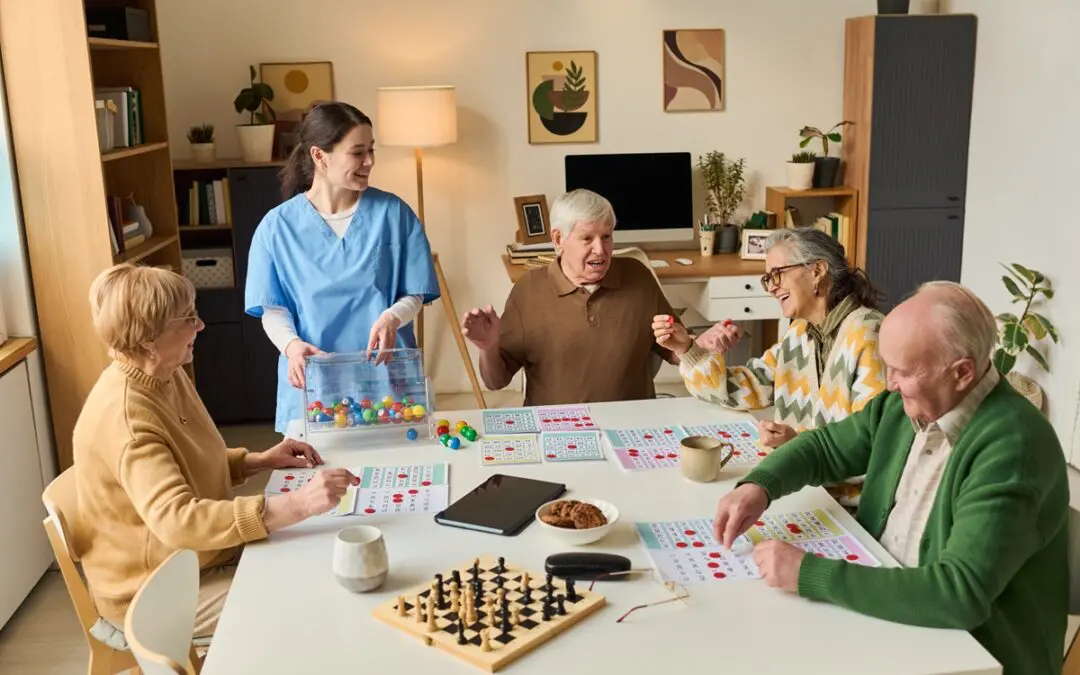
A daily rhythm is essential to life; without it, every day can feel overwhelming and unstructured. But for those dealing with memory issues, finding familiarity and meaning in daily life can feel too challenging. No matter how much effort the family puts into building a routine, maintaining a consistent daily rhythm can still feel difficult.
Even after choosing memory care for their loved one, the family remains unsure about the daily life their loved one is going to live in the community. A common question adult children ask community staff is, “What will my parent actually do all day?”
Even if they are confident in the community’s quality of care, they still wonder what daily life will be like for their loved one. They wonder what steps the community will take to make daily life easier.
Today’s blog covers everything families need to know about memory care daily activities. Before we conclude, we will also cover how families can evaluate whether a memory care community is right for a loved one.
Why Routine Matters For People Living With Dementia
While sticking to a routine may feel like being bound to something, this is what an ideal lifestyle should look like for those dealing with dementia. For healthy individuals, a routine may feel like being controlled, but for people living with dementia, it provides structure. Routine matters for everyone, regardless of the type of dementia they are living with.
Routine gives residents a sense of control when everything seems to be falling apart. Even when they lose awareness of time, routine guides them, helping them predict and plan their day.
Predictability Reduces Anxiety And Confusion
Following a consistent routine and doing tasks at the same time every day gives residents predictability. This familiarity reduces confusion and anxiety as short-term memory fades. Consistent times for different activities also support care coordination, helping caregivers deliver higher-quality care.
What Does A Typical Day In Memory Care Look Like?
Finding normalcy in everyday life isn’t easy for those dealing with memory impairments. To give their daily lives structure and a focal point, care communities promote a structured daily routine. The day is structured to reduce confusion, support independence, and provide continuous 24-hour safety supervision.
Here’s what a standard day in memory care looks like.
Morning
Residents wake up on their own schedule, not at a rigidly set time. After waking at their own pace, they receive patient, compassionate help with grooming and dressing. Then they access communal meals in a calm, supportive dining environment. Staff support residents with eating so they can eat comfortably. After breakfast, residents take part in some light morning activities, including light stretching, short walks, music/sing-alongs, or cognitive exercises like trivia and word games.
Midday
Midday is for purposeful programming and lunch. Residents participate in therapeutic and social activities, including gardening, art projects, and sensory games. After therapeutic activities, they enjoy mealtime, when staff serve nutritious meals. Early afternoon also allows time for rest and access to specialized therapies, including physical, occupational, speech, music, or art therapy. Hairdresser or barbershop appointments may also happen during this block.
Afternoon And Evening
This is probably the most important part of the day and needs special attention, as dementia can cause issues like sundowning. Sundowning can cause symptoms like increased agitation and confusion as daylight fades. Some residents are also prone to sundowning paranoia, where they might accuse staff and peers of stealing their possessions. To prevent these concerns, communities promote calming evening activities. They also focus on light entertainment, such as classic movies, soft music, or simple conversations. Residents enjoy dinner in a quiet, low-stress environment while following a predictable routine that helps them fall asleep.
How Staff Help With Daily Tasks Like Bathing, Dressing, And Eating
Memory care residents’ needs differ from those of older adults who need general support. Standard care staff in assisted living communities typically support seniors with tailored care.
But those with cognitive impairments like Alzheimer’s or other forms of dementia need specialized support with daily living needs on a predictable basis. Missing the built-in daily routine can cause anxiety and confusion. That is why memory care supports daily tasks with cueing and hands-on help that protect residents’ dignity and independence.
Personalized Activities That Engage Memory And Purpose
A dementia diagnosis does not mean the end of life. It simply means adapting to a different lifestyle, and memory care is designed to support that transition. Memory care activities aim to support a holistic lifestyle that balances residents’ emotional, social, and physical well-being. Caregivers plan tailored activities based on a resident’s current cognitive health, life history, and personal interests. These activities aim to support residents’ memory and foster a sense of purpose.
Life-Story-Based Programming
This is one of the most vital activities in memory care programs. It is based on residents’ personal history, favorite pastimes, and cherished memories. In it, residents use their photos from their past, old snapshots, or a story box filled with keepsakes. They gather around and share their beloved memories, reminiscing about the positive memories from the past.
Music
Music does wonders for one’s mental and emotional health. Music therapy taps into a person’s long-term memory, something that even advanced techniques cannot do. But what does music therapy include? It includes listening to familiar tunes from the past, playing simple instruments, or simply listening to songs from adulthood. Communities may also offer group music therapy, where residents listen to cherished music from their past to improve their mood.
Sensory Activities
Sensory stimulation is another key way dementia care communities tap into residents’ long-term memory. It’s especially crucial in moderate and later stages, as it becomes one of the best ways to support meaningful engagement as cognitive abilities decline. Some of the best sensory activities for dementia include sensory bins and pouches, fidget blankets and muffs, hand and foot massages, scent jars and aromatherapy, gardening, viewing calming nature videos, and tasting food items.
Cooking
Hands down, this is one of the most rewarding activities memory care residents can do. This is one of those few activities that engage multiple senses at once. Residents prepare their favorite dishes alongside their peers. Everyone works as a team to create dishes that build positive connections to the past. These shared cooking moments are special, helping residents form lasting bonds as they share memories tied to a dish while preparing it.
Simple Tasks That Encourage Engagement And Independence
Memory care activities don’t need to be special to be effective. Even simple everyday activities can foster a sense of purpose and engage memory. Communities promote familiar, low-pressure tasks that help residents build confidence, encourage independence, and fill their time with purpose. Common tasks include household and life-skill activities like folding and sorting, setting the table, caring for plants, and helping in the kitchen. Creative and cognitive activities in this category include photo sorting, large puzzles, and coloring and painting.
What Families Should Look For On A Memory Care Tour
Memory care can be a reliable care option for families seeking support for a loved one with dementia. Touring is the best way to assess an option’s long-term suitability before committing.
Here’s what families must look for when touring a memory care community for a loved one.
Environment And Layout
- See if the community is built specifically for dementia patients or is a regular care setting with a locked wing.
- Look for simple, open layouts that make navigation easier and reduce confusion.
- Check for visual cues like memory boxes and family photos.
- See if the community has secured outdoor areas.
- Observe whether the community feels calming and whether the colors are soothing.
Staffing And Training
- Ask about the education and training the community provides.
- Assess the typical caregiver-to-resident ratio.
- Check how long caregivers stay and whether residents receive care from the same caregiver.
- Ask how staff handle sudden changes, resistance to care, or wandering.
Safety And Medical Care
- Confirm whether a licensed nurse is on-site 24/7 and how the emergency call system works.
- Assess the kind of security measures in place. For instance, secure entry/exit doors, electronic key locks, and exterior surveillance.
- Ask about the staff’s medication management procedures.
- Inquire what happens when a resident’s physical or cognitive health declines further.
Daily Engagement And Dining
- Review the activity calendar and see what’s included. Look for familiar life-skills routines rather than generic pastimes.
- Ask how residents at the late stage of dementia are kept engaged and supported.
- If possible, taste a meal and assess the dining setting’s ambiance. Also, see how the community manages dietary preferences.
Costs And Administration
- Request a detailed breakdown of the base rent vs. tiered care fees.
- Clarify what’s covered by private pay, long-term care insurance, or Medicaid.
- Ask to review recent state Department of Health inspection and compliance records.
FAQ
- What does a typical day look like in memory care?
A typical day in memory care follows a structured routine designed to reduce confusion, ease anxiety, and give residents a sense of purpose.
Mornings include standard waking-up routines and breakfast, paired with light movement. Mid-morning is for cognitive engagement, hobbies, and medication management. At midday, residents enjoy a social lunch, rest, and access to therapies and scheduled appointments. The afternoon focuses on social time and outings, and the evening brings dinner followed by winding-down routines.
- What activities are good for people with dementia?
People with dementia benefit from activities that provide purpose, comfort, and cognitive or sensory stimulation. They can do daily & household tasks, engage in creative & arts activities, practice cognitive engagement by solving puzzles and playing games, and do some physical activity.
- How does memory care help with bathing and dressing?
Memory care staff help residents bathe and dress by breaking tasks into simple steps. They foster predictable routines and preserve residents’ dignity and independence while providing the support they need.
- Why is routine important for people with dementia?
Routine is vital in dementia care because it provides predictability, reduces stress, and relies on procedural memory, which lasts longer than short-term memory. A structured daily regimen supports clarity, reduces confusion, improves sleep, and encourages autonomy.
- How are memory care activities personalized?
When personalizing activities for memory care residents, staff consider their life history, current preferences, cognitive level, and physical abilities.
Willow Falls—Expert Memory Care Services That Foster Comprehensive Wellness
At Willow Falls, we understand how vital memory care support is to our residents. We provide specialized daily living support and a wide range of activities tailored to each resident and designed to support holistic wellness. These activities go beyond supporting memory function and enrich residents’ quality of life.
Families seeking a trusted memory care community for a loved one with memory challenges can contact Willow Falls. At our premier memory care community, we provide tailored memory care services that support residents’ overall wellness, including cognitive health. With comprehensive daily living amenities, on-site meals designed by registered dietitians, and easier access to care, we provide exceptional care for all residents, helping them live fulfilling lives.
To see our dementia care community in person, schedule a tour today.